

Why Community Management Must Begin Before Residents Move In
What developers must establish before handover to protect services, compliance, resident confidence and long-term property value.
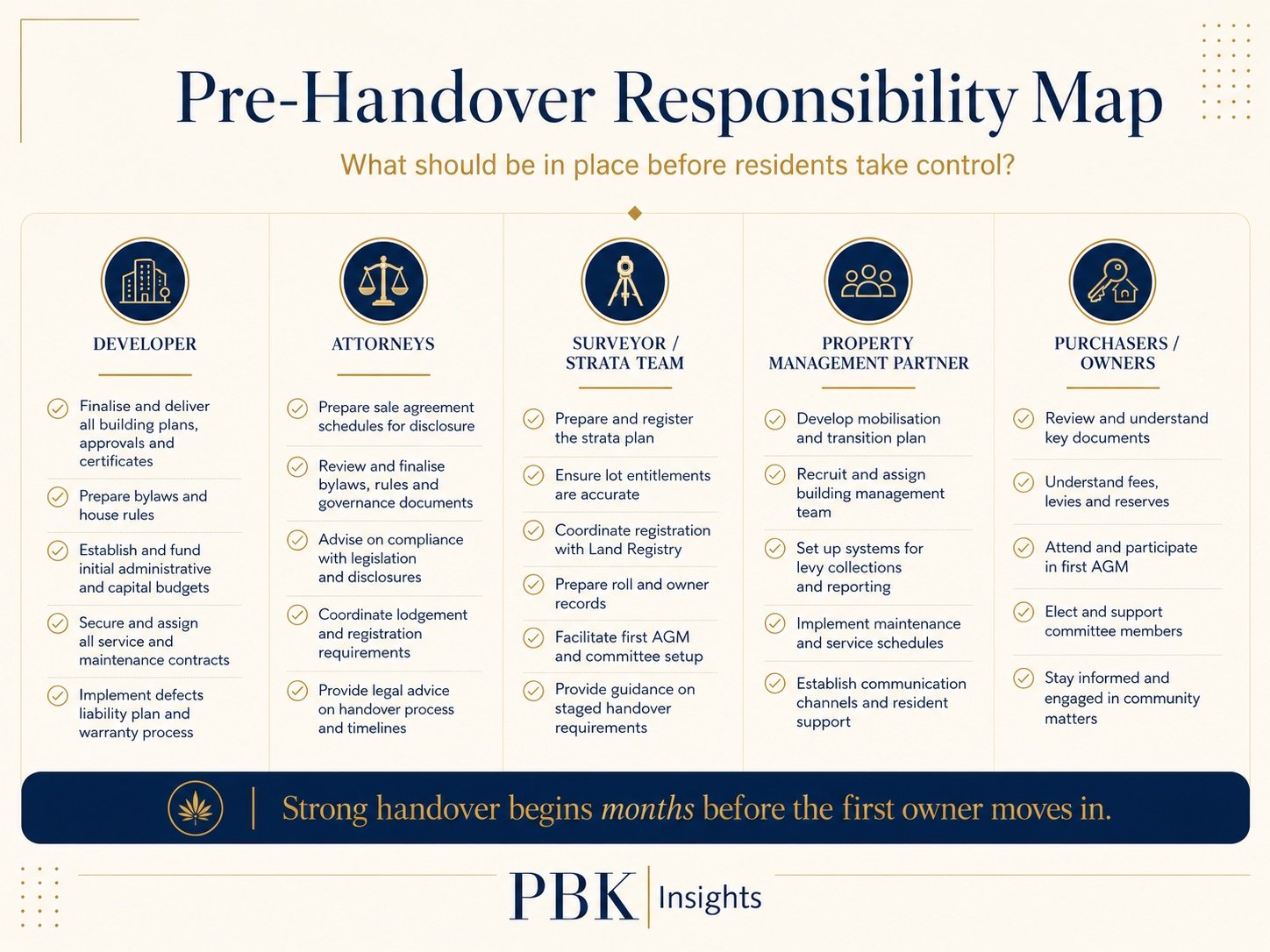
A residential development is not operational because construction is complete. At handover, someone must already know who will collect contributions, pay suppliers, insure common property, manage waste, maintain equipment, communicate with residents and enforce the agreed rules.
Through Paul Bel Kay's work with HoShing Realty & Associates, we have received requests from homeowners trying to establish or repair their community-management arrangements after the developer handed over without an adequate operating structure. By that point, the management gap has usually become a service, financial and trust problem.
By the time a community asks us for help, the developer has usually been gone a year. The work that would have prevented it — the budget, the supplier contracts, the records, the first board — could only have been done while the developer was still there.

The pattern after a weak handover
- Residents are unclear about who is responsible.
- Rubbish collection and common-area maintenance become irregular.
- Suppliers have no stable contract or payment route.
- Maintenance contributions are not based on a credible budget.
- Owners stop paying because they cannot see services or accounts.
- The owners' body lacks records, banking, rules or an elected leadership structure.
- Compliance filings and insurance may be delayed.
This creates a damaging loop: weak services reduce owner confidence; lower collections then make services weaker. The developer may no longer control the property, yet the community has not been equipped to govern itself.
Weak services reduce owner confidence; lower collections then make services weaker.
Strata, HOA and management are different questions
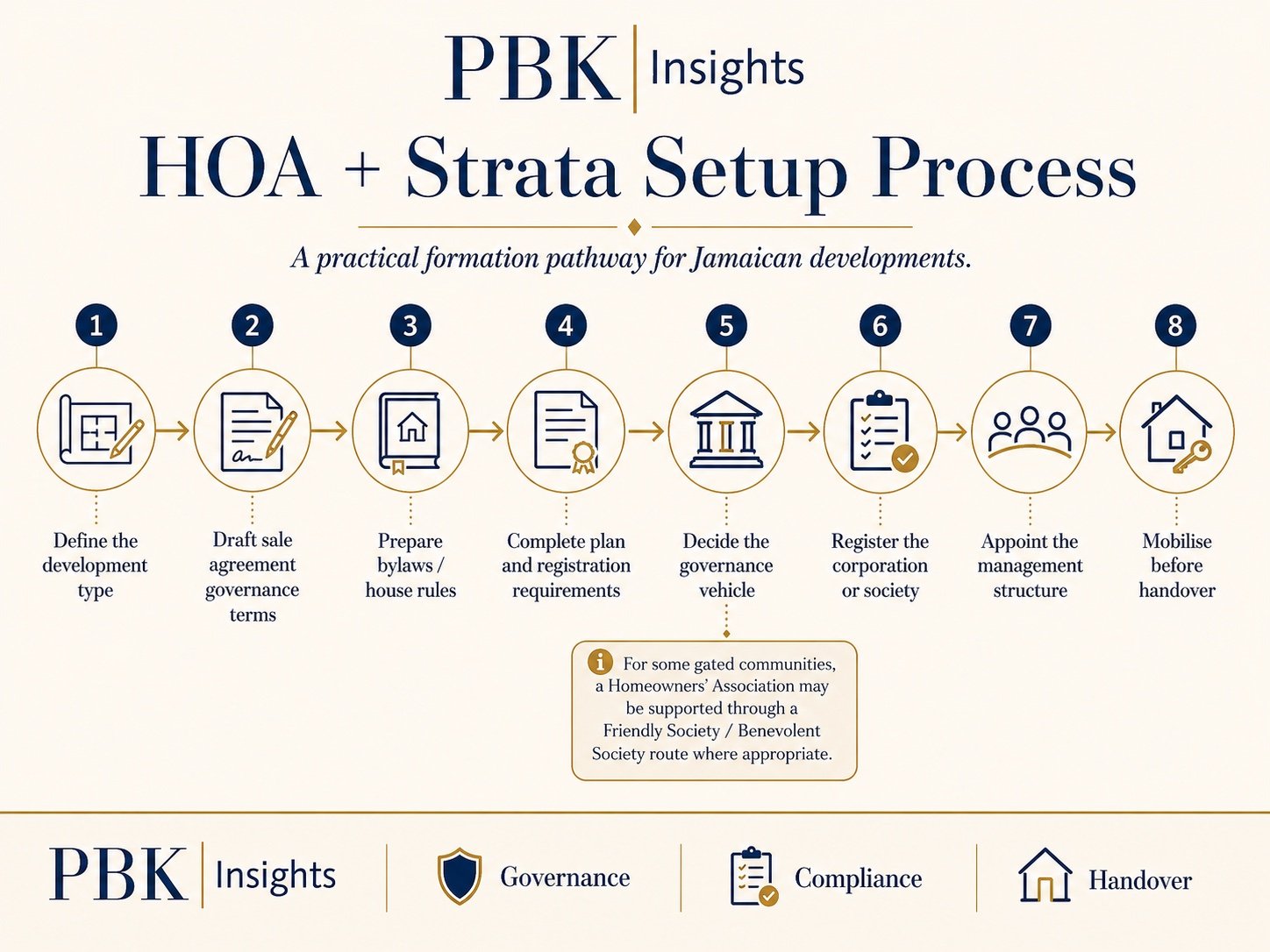
A registered strata operates under the Registration (Strata Titles) Act. A freehold gated community may rely on sales agreements, maintenance agreements, covenants and an association structure. Professional community management is the operational service that supports either model; it is not itself the ownership structure.
The correct structure must be chosen from the titles, common-property arrangements, agreements and applicable law — not from the marketing label used for the development.
What the developer should establish before sales and handover
- The intended legal and governance structure
- Proposed bylaws or community rules
- The first-year operating budget and contribution assumptions
- Responsibility for insurance and statutory compliance
- Ownership and maintenance of roads, gates, utilities and amenities
- Supplier mobilisation and service standards
- Banking, accounting and arrears procedures
- A resident onboarding and communication system
- A record-transfer and defects process
- A clear transition from developer control to owner governance
The buyer must know what they are agreeing to
Bylaws, maintenance obligations and use restrictions should not arrive as a surprise after completion. They affect rental plans, parking, pets, alterations, noise, amenities and the amount owners will contribute to shared services.
The developer should coordinate the legal documents so that buyers receive the proposed rules and contribution information during the sales process. The exact form requires legal advice, but the principle is clear: a purchaser cannot make an informed decision without understanding the community obligations attached to the property.
Why non-payment becomes a legal and operational risk
For a registered strata, contributions are not optional charges. The Commission of Strata Corporations explains that a corporation may apply for a certificate of power of sale to recover contributions that have remained outstanding after statutory requirements are met. This is a serious remedy; it is not an immediate seizure after one missed payment, but owners should understand the consequences of persistent default.
At the same time, a corporation cannot expect good collections while providing no credible budget, accounts or service. Compliance and trust must be built together.
What it took to establish one community
In one anonymised HOA assignment, the solution began with document review and a physical assessment, not with drafting a generic constitution. The team examined the sales and maintenance agreements, infrastructure, service gaps and owner priorities before recommending the legal and operating structure.
- Resident consultation and a formal vote
- Registration planning for a Benevolent Society under the Friendly Societies framework selected for that community
- A constitution and operational rules
- Board elections and governance procedures
- Initial budget, maintenance charges and accounting system
- Bank account and financial controls
- Supplier contracts and service transition
- Board training, document handover and ongoing management support
Karibu: planning before occupancy
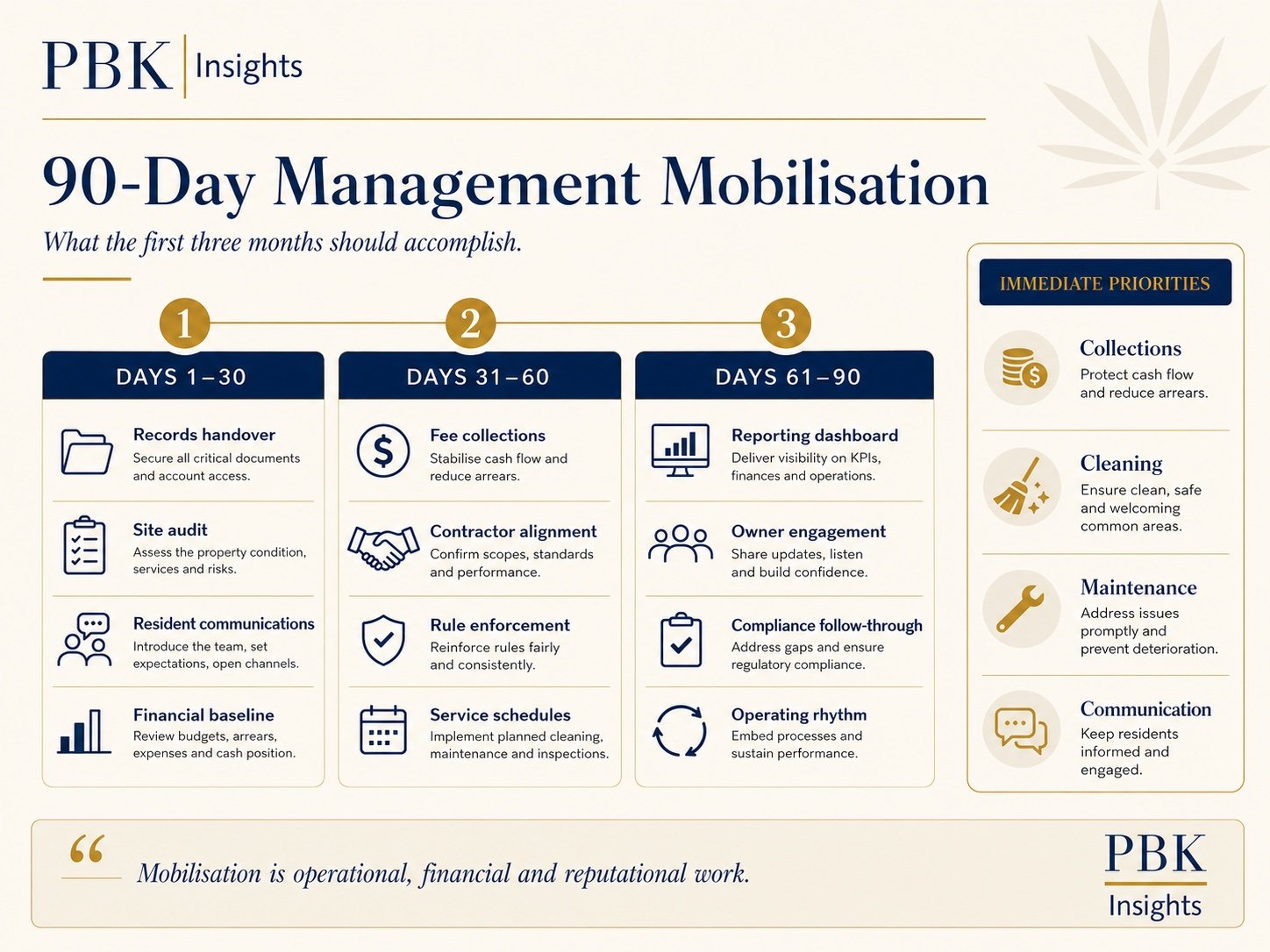
Karibu has not reached handover. That is precisely why management decisions are being considered now: a property-management office, shared amenities, access, rental standards, utility systems, preliminary operating assumptions and resident onboarding all affect the eventual operating model.
A 90-day pre-occupancy framework
- Confirm structure, roles and decision rights
- Approve the first budget and contribution schedule
- Activate banking, insurance and accounting
- Finalise suppliers and service-level expectations
- Receive plans, warranties, manuals and asset records
- Test security, utilities and emergency procedures
- Issue resident handbook and move-in rules
- Track defects separately from routine maintenance
- Establish monthly reporting and escalation