
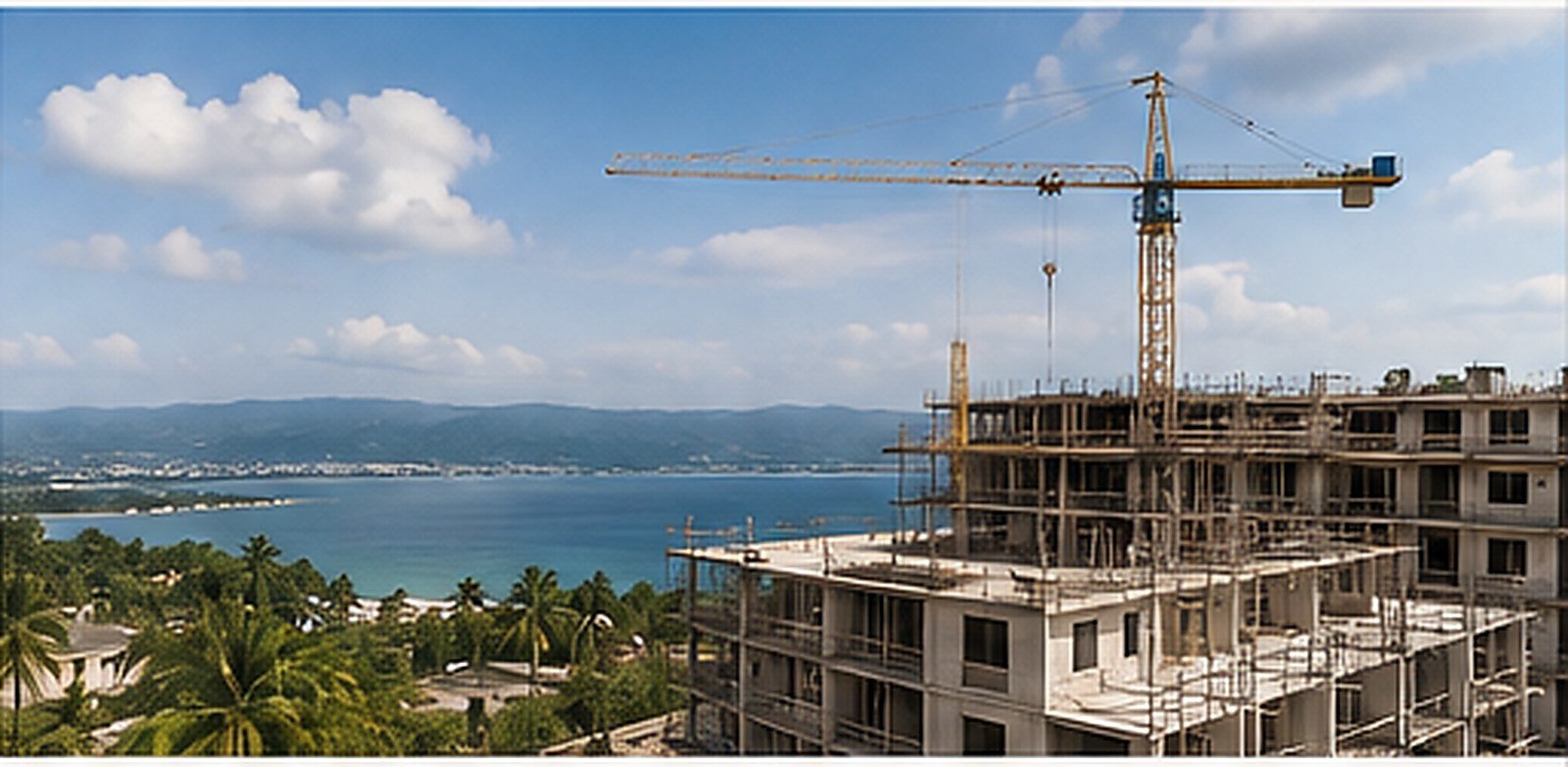

What It Really Takes to Get a Property Development Approved in Jamaica
Lessons from taking Karibu Condominiums from land acquisition and concept design to full approvals, developer registration and presales.
Property development is often presented through its most visible stages: architectural renderings, groundbreaking ceremonies, construction updates and completed buildings.
But before any of that can happen, a developer must move a project through a demanding pre-construction phase involving land, design, feasibility, technical coordination, regulatory review, permits, financing preparation and, where units will be sold before completion, registration with the Real Estate Board.
For a first-time developer, this can be the most difficult stage of the entire project.
Karibu Condominiums began with the acquisition of land in Westgate Hills, Montego Bay, in 2021. Since then, the project has progressed through concept development, architectural redesign, technical submissions, government approvals, quantity surveying, developer registration and preparation for its Founder and Presale release.
The journey has taken longer than a traditionally financed development because the pre-construction phase has been self-funded. But it has also provided a detailed, practical education in what it takes to move a Jamaican property development from an idea to an approved and market-ready project.
This edition of PBK Insights shares the lessons that have mattered most.
Paul Bel Kay Ltd. incorporated.
Land acquisition finalised: 100% ownership of the Westgate Hills site.
Initial US$30k seed funding raised to initiate high-level design.
Partnership with Maffessanti to commence bespoke architectural work.
Project visualisation and 3D modelling initiated to align with luxury market standards.
Technical documentation prepared and preliminary consultation held with NEPA's Development Assistance Centre (DAC) and St. James Municipal Corporation.
Architectural and structural documentation revised following DAC technical feedback.
Formal submission to St. James Municipal Corporation, followed by the agency-review and revision cycle with NEPA and St. James Municipal Corporation.
Final development approvals and building permits secured.
Quantity surveyor's report received, confirming full project costings and budget.
Real Estate Board developer registration granted.
Founder and Presale Investment Round launched.
Karibu's pre-construction stage was self-funded, which is why this timeline runs longer than a typically financed development. It is not a standard Jamaican approval period.
Begin with the land, but do not begin with assumptions
Acquiring a property does not automatically mean that the development initially imagined for it can be approved.
Before committing fully to a concept, the developer and technical team need to understand:
- The registered title and any restrictions affecting it
- The property boundaries and survey information
- The planning and zoning context
- Permitted density and building height
- Access from the public road
- Site levels, slopes and drainage
- Water and sewerage options
- Electricity and utility requirements
- Fire-access and life-safety considerations
- The likely habitable-room or unit capacity
- Any environmental or planning constraints
In Karibu's case, the initial concept comprised 13 residences: eight two-bedroom semi-detached townhouses and five two-bedroom condominium apartments arranged across two residential floors.
That was the scheme we believed the site would support.
It was not the final scheme.
Use NEPA's Development Assistance Centre before submitting
One of the most valuable steps in Karibu's pre-construction process was submitting the proposed scheme to NEPA's Development Assistance Centre before making the formal application. The review identified both additional development potential and the planning requirements that would accompany it.
The DAC provides pre-application guidance. Its role is to help developers determine the feasibility of a proposal, understand the technical and legal requirements, and improve the completeness and readiness of the project before a formal application is submitted.

From concept to approved scheme
- 8 two-bedroom semi-detached townhouses
- 5 two-bedroom condominium apartments
- Apartment building with 2 residential floors
- 8 two-bedroom semi-detached townhouses
- 5 two-bedroom condominium apartments
- 5 one-bedroom penthouse suites
- Apartment building with 4 functional levels
- Basement parking and amenity rooms
- Communal rooftop terrace
- Up to 5 floors
- Up to 52 habitable rooms
- 1.25 parking spaces per unit
- Increased communal amenity provision
The 52-habitable-room figure described the site's planning capacity, not the number of residences permitted.
Turning planning guidance into better design
The DAC review showed that Karibu could accommodate more residential capacity than the original 13-unit concept. We therefore added five one-bedroom penthouse suites, increasing the development to 18 residences.
The additional units also increased the project's parking and communal amenity requirements. At 1.25 spaces per residence, the revised scheme required a minimum of 23 parking spaces.
The site's natural downward slope helped solve this challenge. Instead of expanding surface parking, the design introduced a basement level for underground parking and communal amenity rooms. A shared rooftop terrace was also added above the apartment building.
The result was not simply a larger project. It was a more efficient use of the land, with a stronger unit mix, improved communal facilities and less visible surface parking.
The approved residential mix
- Meridian Collection: 5 two-bedroom condominium apartments
- Summit Collection: 5 one-bedroom penthouse suites
- Savannah Collection: 4 two-bedroom semi-detached townhouses
- Archipelago Collection: 4 two-bedroom semi-detached townhouses
The DAC review did more than identify room for five additional residences. It helped the team rethink the building, parking and communal spaces as one coordinated design.
The practical lesson is simple: use pre-application review before finalising the scheme. Early technical guidance can reveal both constraints and opportunities before significant time and money are committed to the formal submission.
Treat the application as one coordinated technical package
A development application is not simply a set of architectural drawings.
For an apartment or multi-unit residential development, the submission may include:
- Application forms
- Registered title or other proof of ownership
- Property-tax documentation
- Surveyor's diagram
- Location and site plans
- Floor plans
- Elevations and sections
- Foundation and structural drawings
- Roof plans
- Drainage plans
- Sewerage and wastewater proposals
- Water-supply information
- Electrical or utility information
- Fire-safety provisions
- Road access and traffic considerations
- Supporting engineering reports
- Professional certifications
- Prescribed application fees
Karibu submitted its principal application to the St. James Municipal Corporation. We were required to provide approximately 12 copies of the plan package so that the application could be distributed for review.
The precise number of plans and supporting documents can vary by project type, local authority and the agencies that need to comment. Developers should obtain the current checklist directly from the relevant Municipal Corporation.
Understand what each agency is reviewing
The Municipal Corporation is the principal local building authority, but a development may require input or approval from several agencies. For Karibu, the relevant bodies included:
St. James Municipal Corporation
Assesses the planning and building application and issues the building permit and approved plans. Construction should not begin before that permit has been issued. For certain applications, the Corporation circulates the plans to other departments and agencies for comment before the final decision.
National Environment and Planning Agency
Considers planning and environmental matters relevant to the proposal. Its involvement depends on the project's type, location, scale and environmental implications, confirmed during pre-consultation rather than assumed.
Jamaica Fire Brigade
Reviews building and subdivision plans for compliance with fire-prevention and life-safety standards, including means of escape, fire access, active and passive fire protection, and hydrant provision. May also inspect during construction.
National Works Agency
Becomes relevant where a proposal affects a main road, road access, drainage, traffic safety or related infrastructure, to ensure road-safety, access and planning requirements are addressed.
National Water Commission
Reviews how the development will obtain potable water and manage sewage or wastewater: availability of services, proposed connections, water demand, sewerage capacity, internal networks and hydrant locations.
Jamaica Public Service
Reviews the electricity infrastructure and service requirements for the proposed development, including whether new infrastructure, service upgrades, easements or transformers may be required.
One submission does not always mean one reviewing body
In some parishes, the developer submits the primary application to the Municipal Corporation, which then distributes copies to the relevant agencies. That was partly the case with Karibu.
The main plan package was submitted to St. James Municipal Corporation, which circulated it to agencies including the Jamaica Fire Brigade and the National Works Agency. Separate submissions were made to NEPA, the National Water Commission and Jamaica Public Service based on the requirements applicable to the project.
The exact workflow is not uniform across every parish or every development type.
- Municipal Corporation submission
- Distributed agency reviews where applicable
- Separate submissions to NEPA, NWC and JPS where required
- Technical comments and revisions
- Final permit
The exact route differs by parish and by project. Confirm the applicable workflow with the relevant Municipal Corporation before printing plan sets.
Before printing multiple plan sets, the developer or project manager should confirm:
- Which agency is the primary receiving authority
- Which agencies the Municipal Corporation will circulate the plans to
- Which agencies require separate applications
- How many physical and digital copies are required
- Whether each submission requires its own fee
- Which approvals are conditions of the final building permit
- Who will track and respond to agency comments
A submission tracker should be established from the outset.
The project team must be assembled before submission, not after approval
A credible submission depends on professionals who can prepare, certify and defend their respective parts of the proposal. The exact team will vary, but for a multi-unit development it may include:
- Developer or development manager
- Registered architect
- Civil and structural engineer
- Mechanical, electrical and plumbing engineers
- Commissioned land surveyor
- Quantity surveyor
- Geotechnical or soil specialist, where required
- Environmental specialist, where required
- Planning consultant
- Attorney-at-law
- Project manager
- Fire or life-safety consultant, where required
- Marketing and sales advisers
- Property or strata-management adviser
The developer sets the vision, but the experts should be empowered to lead the work they are qualified to perform.
But credentials alone are not enough.
One of the most important lessons from Karibu has been the value of building a team that genuinely believes in the project.
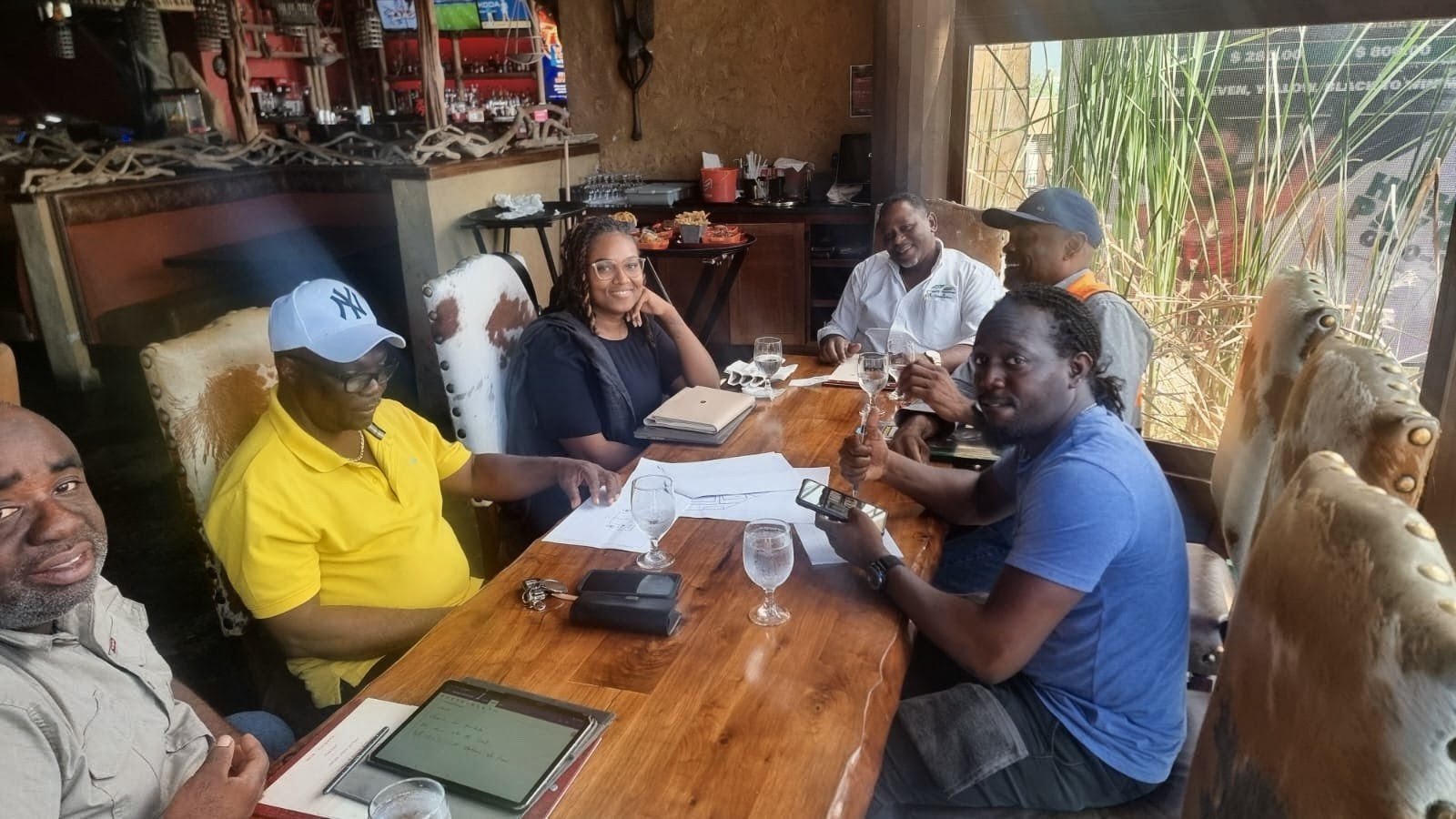
Although Paul Bel Kay is the developer and Karibu began with my vision, I have worked to make the project feel shared. Each consultant has been empowered to lead within their discipline and take ownership of their part of the development.
That does not remove the developer's accountability. It improves the quality of the work.
The strongest development teams are not groups of consultants waiting for isolated instructions. They understand the broader purpose of the project, communicate across disciplines and recognise that one technical decision can affect design, cost, approvals, sales and long-term operations.
Expect the design to change during technical review
Developers sometimes treat revisions as evidence that something has gone wrong.
Often, revision is simply part of turning a concept into an approvable and buildable project.
Karibu changed substantially between its initial concept and final approved form. The additional floor and penthouse suites increased the project's value, but they also required coordinated revisions to:
- Architecture
- Structural design
- Habitable-room calculations
- Water demand
- Sewage and drainage
- Fire safety
- Electrical demand
- Costing
- Unit mix
- Sales documentation
Every design change has a chain reaction.
This is why the architect, engineers, quantity surveyor and developer should work from a controlled drawing register. When one discipline revises a plan, the related consultants must know which version is current.
A technically correct detail drawn against an outdated architectural plan can still delay the submission.
Approval time is not the same as total development time
Published processing times can be useful, but they rarely capture the full pre-construction journey.
- Agency processing time
- Consultant production time
- Developer decision time
- Financing delays
- Technical revision time
The complete timeline may also include:
- Land acquisition
- Financing
- Surveys
- Concept design
- Redesign
- Engineering
- Cost planning
- Pre-consultation
- Agency submissions
- Requests for additional information
- Technical revisions
- Committee meetings
- Permit collection
- Developer registration
- Sales preparation
Karibu's timeline was particularly long because the project's pre-construction work was self-funded. Cash-flow constraints affected how quickly each technical stage could be commissioned and completed.
That is not necessarily typical of every Jamaican development, and the Karibu timeline should not be presented as a standard approval period.
The more useful lesson is that developers should distinguish between agency processing time, consultant production time, developer decision time, financing delays and time spent responding to technical comments.
Budget for approvals as a development phase of its own
Pre-construction is not an inexpensive waiting period before the "real" project begins. It can require expenditure on:
- Land and legal work
- Surveys
- Architectural design
- Engineering
- Quantity surveying
- Planning advice
- Environmental work
- Application and processing fees
- Printing and plan reproduction
- Technical revisions
- Interest and holding costs
- Developer-registration requirements
- Sales and legal preparation
A developer who acquires the land but has not budgeted for this phase may own a site without having the resources needed to turn it into an approved development.
Karibu's pre-construction journey has been funded directly by the developer to date. That has increased the time required to reach this stage, but it has also allowed the project to progress without compromising its central vision.
For future developments, the lesson is clear: prepare a dedicated pre-development budget and cash-flow plan before beginning detailed design.
Building approval and developer registration are not the same thing
Receiving approved plans and a building permit does not automatically authorise the developer to begin selling units under regulated prepayment arrangements. They are separate regulatory stages.
The building permit
The building permit is issued by the local building authority and authorises construction in accordance with the approved plans and conditions. Construction must follow the approved plans, permit conditions and inspection requirements.
Real Estate Board developer registration
The Real Estate Board regulates real estate developers in relation to matters including prepayment contracts, advertising development schemes and maintaining the required trust-account arrangements.
To apply as a developer, the REB requires evidence of ownership of the development land and evidence that the development scheme has been approved, including approved plans and letters from the relevant local planning authority.
This is commonly described as obtaining the developer's licence, although the REB's formal language refers to the developer's initial and renewed registration.
For a developer intending to market and accept payments for units before construction is complete, this stage should be planned early. Developers should obtain legal advice and direct guidance from the REB rather than wait until the marketing campaign is ready to begin.
Building permit
Authorises construction in accordance with approved plans and conditions.
REB developer registration
Regulates the developer's marketing, prepayment contracts, purchaser funds and related obligations.
This is general information, not legal advice. Developers should seek their own legal counsel and direct guidance from the Real Estate Board before marketing units or accepting prepayments.
What I would do differently on the next development
Use the DAC before finalising the scheme
The modest cost of early technical review can protect a much larger investment in design and consultant work.
Create an approvals matrix
List every authority, document, submission date, fee, response, condition and outstanding item.
Appoint one person to coordinate the submission
The architect may lead the drawings, but someone must manage the complete application and track every agency.
Engage utility agencies early
Water, sewerage and electricity requirements can materially affect design and cost.
Include the quantity surveyor before the scheme is final
An approvable project must also be financially deliverable.
Choose consultants and contractors who believe in the project
Technical competence is essential, but aligned commitment changes how problems are solved.
Give professionals ownership of their disciplines
The developer sets the vision and makes the final commercial decisions. The experts should be allowed to lead the work they are qualified to perform.
Do not announce presales before the regulatory pathway is understood
The marketing calendar should follow the approval and developer-registration strategy, not get ahead of it.
Karibu's position today
Karibu Condominiums received its final development approvals and permits in May 2025.
Paul Bel Kay subsequently completed its Real Estate Board developer-registration process in May 2026, enabling the development to move into its Founder and Presale investment round, running from July 2026 to June 2027.
Karibu's position today
The project is now transitioning from the pre-construction approval phase into capital mobilisation, sales and construction preparation.
The route to this point has not been quick or inexpensive. But it has demonstrated that development approval is not a single application or government stamp.
It is the outcome of a coordinated process involving the developer, the land, the proposition, the professional team, the local authority, multiple technical agencies and the discipline to keep responding until the project is ready.
Continue the development series
This is the first edition in a PBK Insights series following the full property-development cycle in Jamaica.
Coming next
- Phase Two: From Approval to Construction
- Phase Three: From Completion to Closing, Handover and Community Management
Subscribe to PBK Insights for future editions and practical perspectives from Paul Bel Kay's development and advisory work.
Discuss a development or advisory project with Paul Bel Kay Ltd. →
Official guidance referenced
- NEPA Development Assistance Centre
- St. James Municipal Corporation, development approval
- St. James Municipal Corporation, building-plan processing
- Jamaica Fire Brigade, fire prevention
- National Works Agency, planning applications
- National Water Commission, developers' guide
- Jamaica Public Service, business and development services
- Real Estate Board, frequently asked questions